
Lawsuits and umbrella insurance protection can often be a tangled web, but understanding them is crucial in today’s litigious society. With the rising number of legal disputes, having the right insurance can mean the difference between financial stability and overwhelming debt.
Umbrella insurance acts as a safety net, providing additional coverage beyond standard liability policies. It steps in when your regular insurance limits are exceeded, protecting your assets and future earnings from potential lawsuits.
Understanding Umbrella Insurance and Its Role in Lawsuits
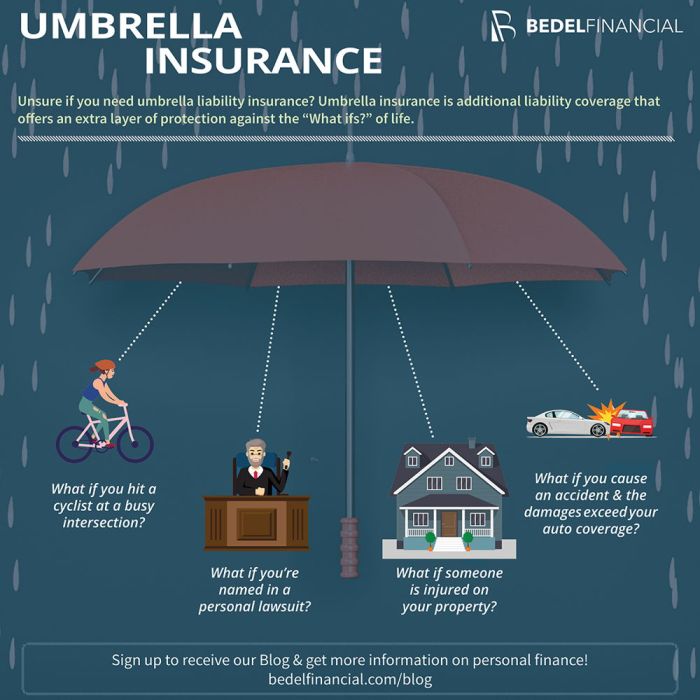
Umbrella insurance is a valuable financial tool designed to provide an extra layer of protection beyond standard liability insurance. By offering coverage for lawsuits and claims that exceed the limits of your underlying policies, it serves as a safety net against significant financial losses. This discussion delves into the purpose of umbrella insurance, its distinctions from standard liability coverage, and the scenarios in which it proves most beneficial.Umbrella insurance is primarily intended to shield individuals from significant lawsuits that could otherwise lead to financial ruin.
When a claim arises, if the costs exceed the limits of your primary liability insurance, umbrella insurance kicks in, covering the additional expenses. Typically, this coverage can protect against various claims, including bodily injury, property damage, and personal liability. It is crucial to understand that umbrella insurance does not replace primary liability insurance; instead, it complements it, often with a much higher limit.
Differences Between Umbrella Insurance and Standard Liability Insurance
Understanding the distinctions between umbrella insurance and standard liability insurance is essential for effective risk management. While both types of insurance cover liability claims, they serve different purposes and have different coverage limits.
- Coverage Limits: Standard liability insurance often has set coverage limits, which may not be sufficient in severe cases. Umbrella insurance offers higher coverage limits, protecting against claims that exceed those limits.
- Scope of Coverage: Standard policies may not cover all liability risks. Umbrella insurance typically extends coverage to a broader range of claims, including those not included in your primary policies.
- Cost: While umbrella insurance can seem like an additional expense, it is often quite affordable compared to the potential financial risks associated with lawsuits. The cost of umbrella insurance is generally lower than the cost of increasing coverage limits on a standard policy.
Scenarios Where Umbrella Insurance Would Be Beneficial
Several situations illustrate the importance of having umbrella insurance. These scenarios highlight potential legal battles that could arise, leading to significant financial implications.
- Severe Car Accidents: If you are involved in a serious car accident that results in extensive medical bills and property damages, the costs may swiftly exceed your auto insurance limits. Umbrella insurance can cover these additional costs.
- Injury on Your Property: If a visitor suffers a serious injury on your property, you may face a lawsuit that exceeds your homeowner’s liability coverage. Umbrella insurance protects you against the financial fallout.
- Social Media Risks: In the age of social media, defamation claims are becoming more common. If a post leads to a lawsuit, umbrella insurance can provide coverage beyond standard personal liability policies.
“Umbrella insurance provides peace of mind, knowing that you’re protected against unforeseen financial disasters that could arise from lawsuits.”
The Relationship Between Lawsuits and Various Types of Insurance
When discussing the intricacies of lawsuits and their intersections with insurance, it’s essential to consider how various types of insurance offer protections in legal situations. From pet insurance to travel insurance, each policy has its distinct role in mitigating financial risks associated with lawsuits that may arise during everyday activities. Understanding these nuances can empower individuals to make informed decisions regarding their insurance needs.Different types of insurance provide varying levels of coverage when faced with legal disputes, each tailored to specific scenarios and risks.
For instance, pet insurance primarily covers veterinary expenses, but it can also play a role in lawsuits stemming from pet-related incidents. On the other hand, travel insurance assists with unexpected travel disruptions but may include liability coverage for accidents that occur during a trip. Vision insurance, while focused on eye care, does not typically offer any legal protections. The contrast in these policies highlights the importance of selecting coverage that aligns with one’s lifestyle and associated risks.
Protections Offered by Umbrella Insurance Versus Supplemental Insurance
Umbrella insurance and supplemental insurance both serve to enhance basic coverage, but they do so in different ways, especially concerning legal claims. Umbrella insurance provides an extra layer of liability protection that kicks in once the limits of other policies, like homeowners or auto insurance, are exhausted. This type of insurance is particularly valuable in protecting against significant lawsuits that could lead to substantial financial loss.In contrast, supplemental insurance is designed to cover specific gaps in existing health coverage, such as out-of-pocket costs for critical illnesses or accidents.
While it may provide some assistance in cases of personal injury claims, its primary function is not liability coverage. For example, a policyholder with supplemental health insurance may still need umbrella insurance to guard against high liability claims stemming from incidents like accidents or property damage.
“Umbrella insurance acts as a safety net, covering costs that exceed the limits of standard liability policies.”
Common Lawsuits Related to Pet Ownership and the Role of Pet Insurance
Pet ownership can lead to various legal challenges, including bites, property damage, or sudden illnesses resulting in significant vet bills. In these instances, pet insurance can offer valuable support. Below are examples of common lawsuits that may arise and how pet insurance can be beneficial:
Dog Bites
If a pet causes injury to another individual, the pet owner may face a lawsuit for damages. Pet insurance can assist with legal fees or settlements related to such incidents.
Property Damage
Pets can inadvertently cause damage to a neighbor’s property, potentially leading to lawsuits over repair costs. Some policies may cover legal costs associated with these claims.
Vet Bills
If a pet’s illness results in costly treatments and the insurance company does not cover the expenses, pet owners may find themselves in disputes that could escalate to legal action. Pet insurance helps alleviate some of these financial burdens.In these scenarios, pet insurance not only offsets veterinary expenses but can also provide peace of mind regarding legal liability, highlighting the necessity of comprehensive insurance coverage for pet owners.
Having the right policies in place is crucial to navigating the complexities of lawsuits effectively.
Comprehensive Coverage
Understanding the necessity of various insurance forms is crucial in today’s society, especially when it comes to defending against potential lawsuits. Having multiple types of insurance can provide a safety net that protects individuals and families from unforeseen legal claims. Each insurance type serves a specific purpose and collectively they enhance overall protection, giving peace of mind in diverse situations.Multiple forms of insurance, such as umbrella and watercraft insurance, play a vital role in shielding against lawsuits.
Umbrella insurance offers an extra layer of liability protection beyond the limits of homeowners, auto, or boat insurance policies. Watercraft insurance is particularly significant for individuals who own boats or personal watercraft, as incidents on the water can lead to costly legal claims. Furthermore, integrating vision insurance with other types can also reduce the risk of legal claims, as it covers potential medical expenses related to vision-related accidents.
This comprehensive approach not only protects your assets but also helps maintain your financial stability.
Coverage Options Comparison
The following table Artikels the coverage options of pet insurance, travel insurance, and umbrella insurance, focusing on their legal implications. Understanding these differences can guide individuals in selecting the right insurance policies to mitigate legal risks effectively.
| Insurance Type | Coverage Type | Legal Implications |
|---|---|---|
| Pet Insurance | Veterinary expenses, accidents, and illnesses | May cover liability for damages caused by your pet, reducing potential lawsuits |
| Travel Insurance | Trip cancellations, medical emergencies, lost luggage | Covers legal liabilities arising from travel incidents, such as injury to others |
| Umbrella Insurance | Excess liability coverage beyond home and auto | Provides a broader range of protection against lawsuits and higher claim limits |
In summary, having a comprehensive insurance strategy that includes different insurance types can protect against various legal claims, thus safeguarding your financial future.
Concluding Remarks
In conclusion, navigating the complexities of insurance and lawsuits can be daunting, but with the right umbrella coverage, you can safeguard yourself against unexpected legal challenges. Whether it’s understanding the nuances of different insurance types or recognizing the importance of comprehensive protection, being informed is your best defense.
FAQ Overview
What is umbrella insurance?
Umbrella insurance is a type of liability insurance that provides extra coverage beyond standard policies, protecting against larger claims.
Do I need umbrella insurance if I have homeowners and auto insurance?
Yes, umbrella insurance can provide additional coverage that goes beyond the limits of your homeowners and auto policies.
How much umbrella insurance should I get?
The amount typically depends on your assets and potential risk factors, but a common recommendation is to have at least $1 million in coverage.
Are there exclusions in umbrella insurance?
Yes, umbrella policies usually exclude certain types of claims, such as intentional damage or business-related liabilities.
How does umbrella insurance differ from excess liability insurance?
Umbrella insurance provides broader coverage and can cover claims not included in your primary policies, while excess liability insurance only extends the limits of existing policies.


